Ask any longtime boater what they’re willing to give up for a faster ride, and you’ll usually get the same answer: comfort. It’s a trade-off that’s defined monohull performance boats for generations. More speed means more pounding, more roll, and a rougher day for everyone on board. However, that’s an old rule, and it’s one that double-hull catamaran design has now rewritten.
The Physics of Two Hulls
A monohull boat pushes a single wide surface through the water, displacing it and fighting it the entire way. A catamaran splits that job between two slender, widely spaced hulls. The result is less wetted surface area, less drag, and a more efficient transfer of engine power into forward motion. Less energy is wasted fighting the water, so more of it goes toward actually moving you across it. Well-designed catamarans consistently deliver stronger acceleration and higher top-end speed than a monohull of similar size and horsepower.
The width between the hulls has its purpose as well – acting like a natural outrigger. Instead of rolling side to side the way a monohull does, a catamaran resists that motion by design. You get a flatter, more level ride even when you push the throttle down.
Stability Built In
Stability in a catamaran isn’t a compromise. It’s built into the hull from the start. A twin-stepped hull design, paired with a structural grid system, reduces rolling and cuts down on the pounding and fatigue that come standard with a day on a traditional boat. Rough water gets absorbed and managed rather than fought.
That matters most at speed, in chop, and on longer runs where a rough ride wears everyone down by the third hour.
Speed Without the Sacrifice
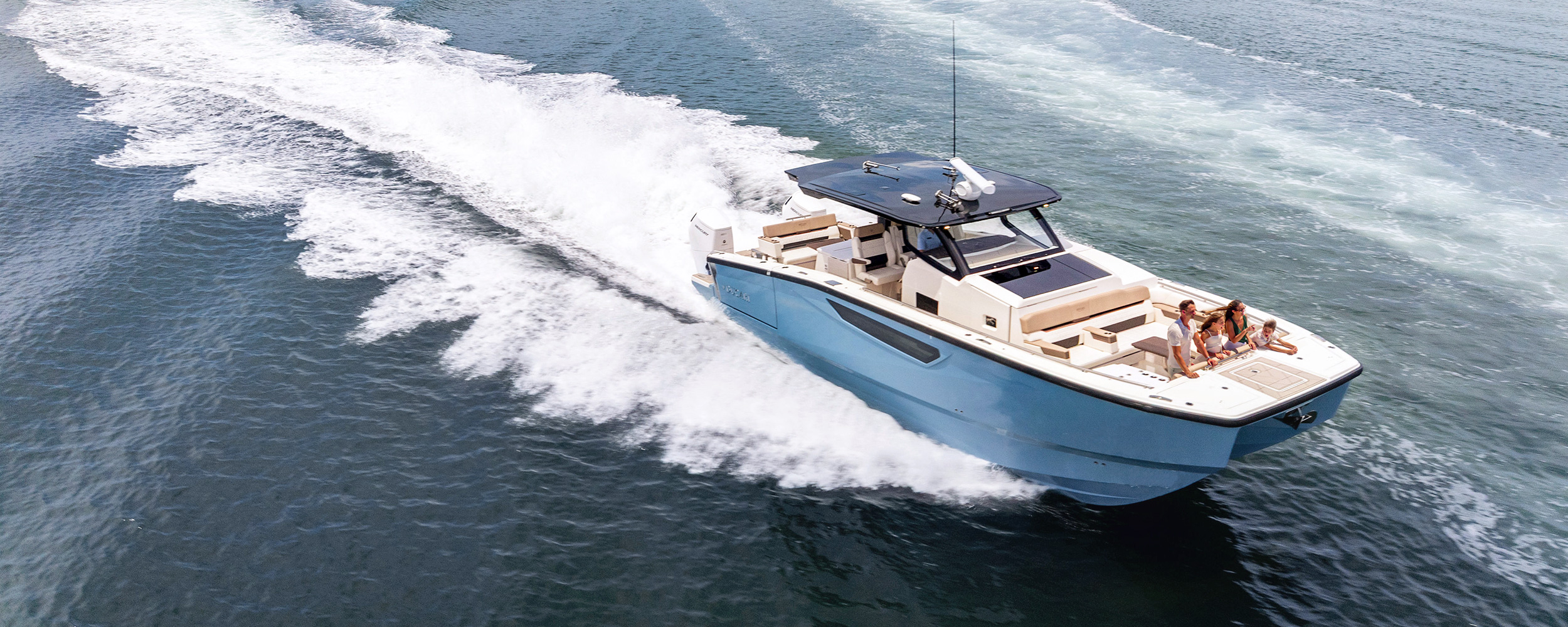
The efficiency gains from a twin-hull design aren’t just about smoothing out the ride, they translate directly into performance. A more efficient transfer of energy means real acceleration and real top-end speed, not just a smoother version of “slow.” Pair that hull efficiency with some serious horsepower and you get a boat that can genuinely fly across open water while still tracking true and flat.
Maneuverability improves too. With engines mounted farther apart than on a monohull, a catamaran has more leverage to work with – sharper turns, tighter docking, and in some designs, the ability to pivot within its own length or even move sideways. Speed on the straightaway and control in tight quarters aren’t opposing goals with this design; they come from the same source.
The Ducari Difference
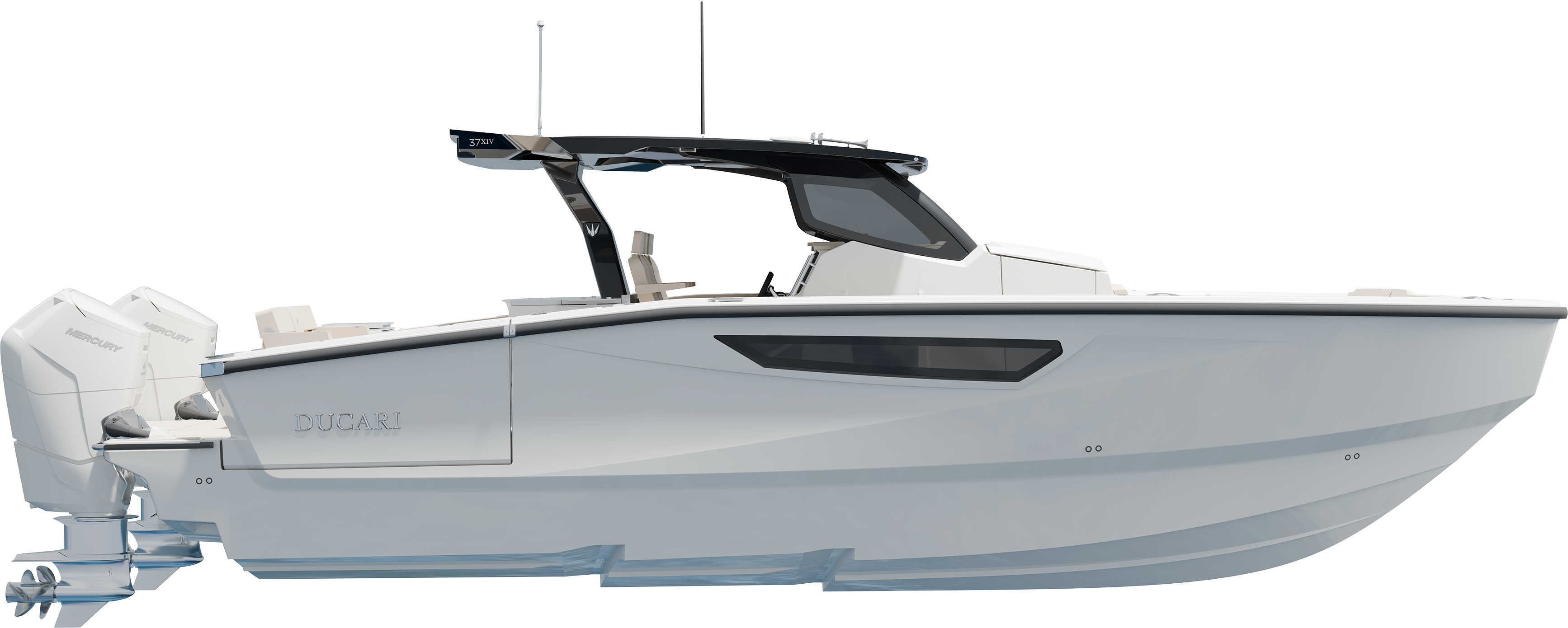
Every principle above is exactly what a Ducari Yacht is built around. Ducari’s power catamarans pair a twin-stepped hull and structural grid system with twin Mercury® 600 HP V12 engines, delivering the kind of acceleration and top speed that used to require sacrificing ride quality. The result is a boat that commands rough water with the same composure it brings to a flat-calm sandbar day.
Ducari believes luxury, comfort, and performance should never be a trade-off. The double hull is what makes that possible.
Learn more about the innovative design of Ducari’s 37XIV Sport here.